Lake Misurina Parking: Where to Leave Your Car, Fees and the Best Time to Arrive
I’ve been running this site about Misurina for 15 years and have lived with this
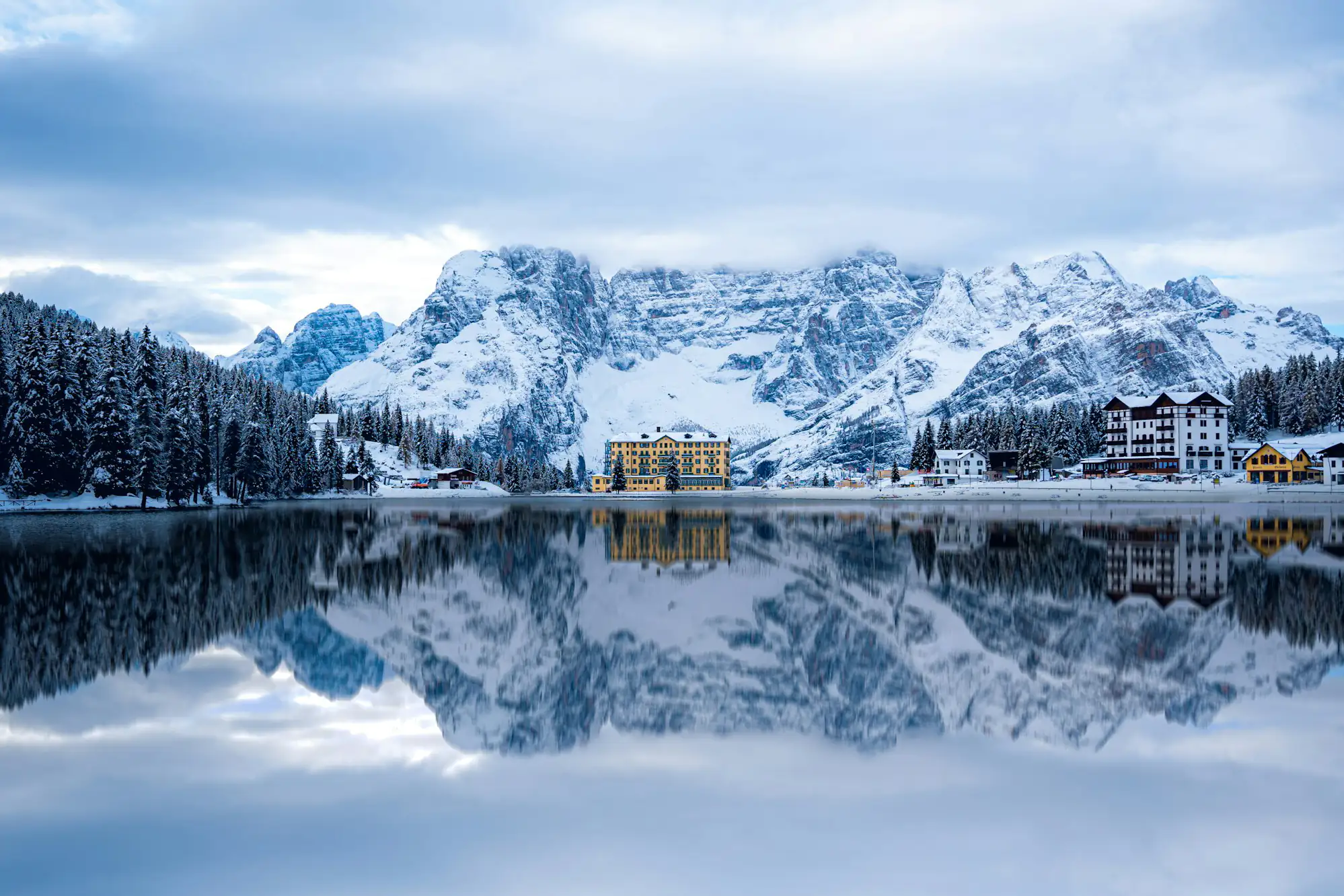
Lake Misurina is one of the most evocative and renowned destinations in Cadore, nestled among the spectacular Dolomites of Belluno. Surrounded by imposing peaks such as the Tre Cime di Lavaredo and Monte Cristallo, the lake offers a natural setting of great charm that captivates visitors of all ages.
I’ve been running this site about Misurina for 15 years and have lived with this
Updated: September 2026 · Fees, dates and timetables apply to the 2026 summer season. If
Last week a tourist asked me if he could swim in the lake. It was August, midday, thirty-two degrees. I replied: “No, you shouldn’t even try, the water comes from glaciers and after three minutes you could be in hypothermia”. Lake Misurina is not suitable for swimming, it never has been. Yet every summer someone tries.
Renting a rowing boat is the only way to get on the water here: swimming in the lake is not allowed, and there are good reasons for that — rules, cold water and real alternatives are covered in the dedicated article.
Misurina is this: an alpine lake at 1,754 metres that everyone photographs but few truly understand. They call it “the pearl of the Dolomites” – and fair enough, the nickname fits – but what makes this place special is not the perfect reflections for Instagram. It is the particular microclimate that has made this area a point of reference for the treatment of respiratory diseases. It is the air that rises from the Val Pusteria and stops here, held back by the walls of Cristallo and the Cadini. It is the fact that in winter, when the tourist buses disappear, the lake freezes and becomes a white expanse where, often, the only sound is the wind.
If you arrive here on Ferragosto at midday you will find the car parks full, queues for pedal boats and people desperately seeking a free spot for a selfie. If you arrive at seven in the morning at the end of September, when the larches begin to turn gold and the mist slowly rises from the valley floor, you understand why I would have chosen to live at this altitude for at least twenty years.
This guide was created for those who want to understand the Dolomites, not just pass through them. You will find practical information – when to come, how to get there, where the car parks are really convenient – but also what no brochure tells you: that the Tre Cime trail is technically easy but in the rain it becomes a nightmare, that the sunrise at Rifugio Auronzo is worth more than any crowded sunset, that at Misurina winter is a different story altogether.
Misurina is a hamlet of Auronzo di Cadore, province of Belluno, nestled between some of the most famous walls of the Dolomites. The lake sits at 1,754 metres above sea level – an altitude you feel, especially if you are used to living in the plains and arrive here thinking you are going for a walk like in the park near your house.
The surface is small: 0.14 square kilometres, approximately one kilometre in length. The complete loop is 2.6 kilometres, forty-five minutes walking at a leisurely pace. The maximum depth? Five metres. This is why the water is so transparent: it is shallow, cold, and continuous water circulation keeps everything clear. On windless days the Tre Cime are perfectly reflected on the surface. Those days happen, but they are not as frequent as people who arrive with a camera would like.
The origin of the lake is glacial. During the last glaciation the glaciers carved out the valley and left this natural basin. Around you have the Tre Cime di Lavaredo to the northeast – those that everyone knows even without ever having been here – Monte Cristallo to the west, the Cadini di Misurina to the east. A little further south is Lake Antorno, smaller and less touristy, which is always worth a detour if you want a quieter experience.
The microclimate is the true peculiarity of this area. The air here is different, everyone notices it after a couple of hours. It is not suggestion: the conformation of the valley creates particular conditions, with balsamic properties recognised even by medicine. This is why in the Fifties they built the Pio XII Institute, specialised in the treatment of childhood asthma. It still operates today, and it is no coincidence that it is located right here.
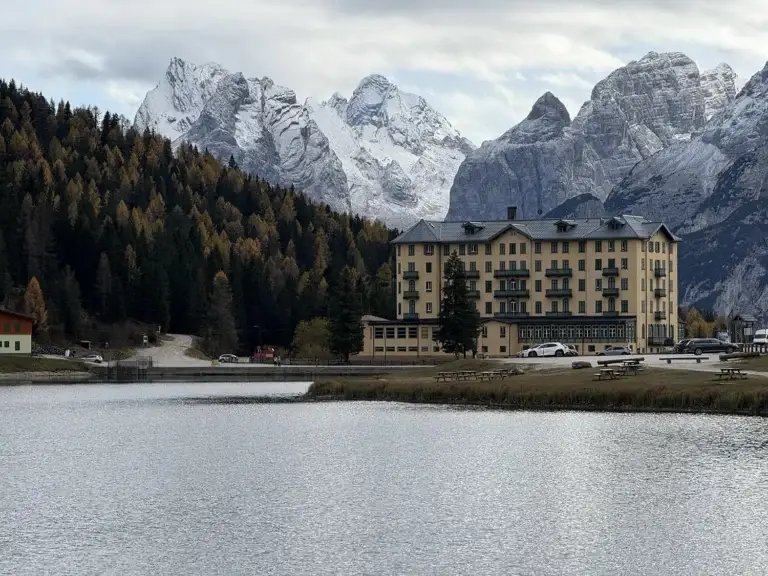
From Cortina d’Ampezzo it is twelve kilometres along the State Road 48 bis of the Dolomites. The road is beautiful, panoramic, with curves that take you uphill progressively. The main car parks are three, all close to the lake. The problem is that in high season – July, August, and low season weekends when the weather is nice – they fill up quickly and are all paid (the DeSpar one has a one-hour time limit).
My advice? If you come in summer, arrive before eight or after five in the afternoon. At midday you find chaos, and that is not the right way to get to know this place. If you come in winter the situation is completely different: car parks fairly empty, silence, and the lake becomes a frozen surface where ski mountaineers occasionally pass heading towards Val Popena.
For those without a car there are seasonal buses from Cortina. They run well in summer and winter, less so in spring and autumn when services are reduced. From Belluno or Venice you can take the train to Calalzo di Cadore, then the bus to Cortina, and from there the shuttle to Misurina. It is feasible, but requires planning. The timetables change every season, so it is better to check first on the Dolomiti Bus website.
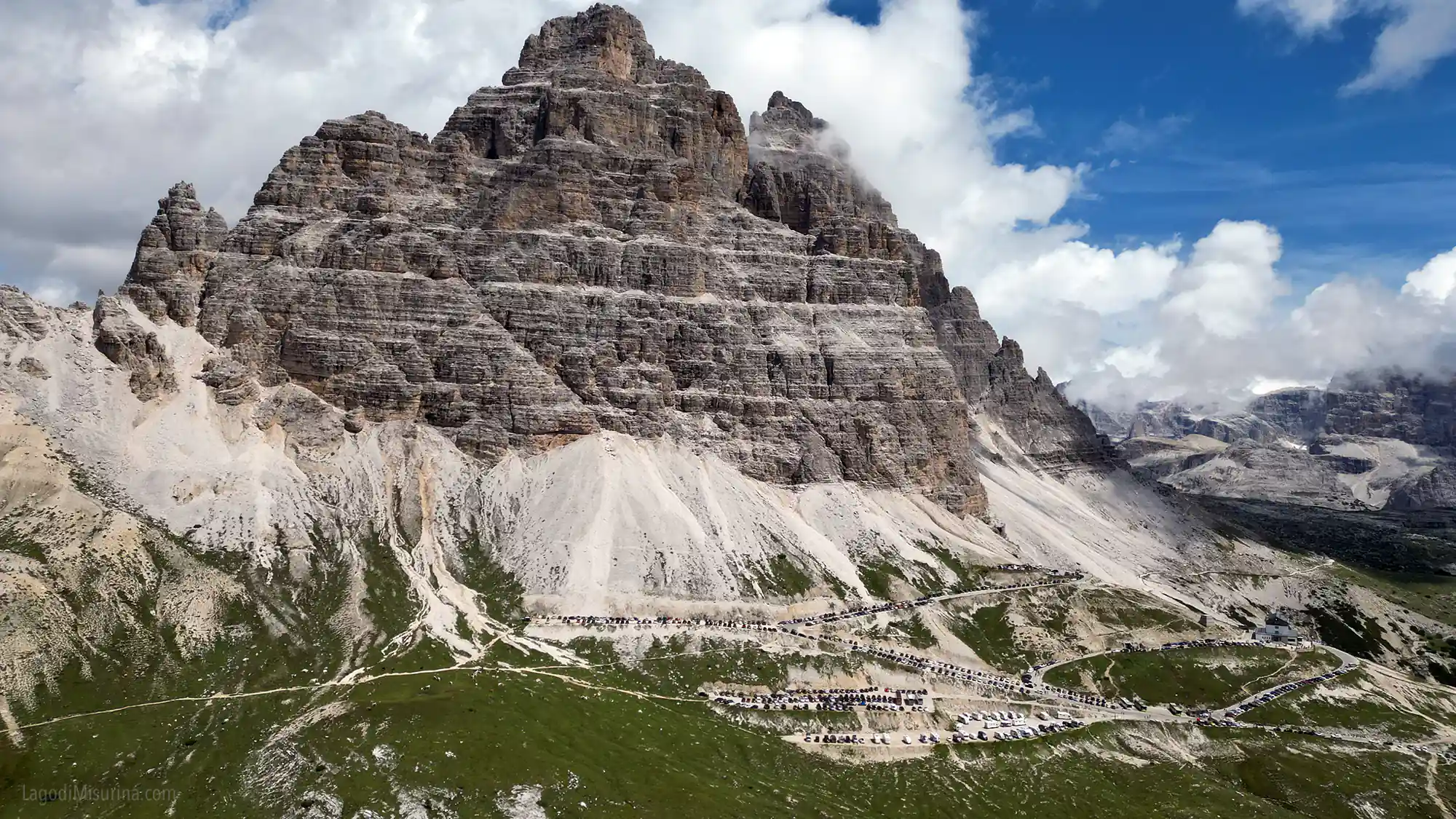
One thing: if you arrive by car and want to continue to the Tre Cime, from Misurina there is a toll road to Rifugio Auronzo and the ascent must be booked, even if you have a disabled pass. It is eight kilometres of hairpin bends, the road is narrow, and in summer there is traffic. It costs 40 euros (2025) for the car, but it saves you three hours of uphill walking. Then you decide if it is worth it. For me, if you have legs and breath: WALK UP!

The classic loop around the lake is the first thing anyone does when they arrive here. Duration: 45 minutes if you walk normally, an hour if you stop to look at the view every hundred metres (which you will). The trail is flat, wide, with places to sit. Technically it is accessible even with pushchairs, but some sections have natural ground with some roots and stones, so a baby backpack is better if you have small children.
Along the path you find picnic areas – real ones, with tables and benches – and several viewpoints. The north side offers the best view of the Tre Cime, the west side faces Cristallo. If you want the perfect photo with reflections, the best light is early morning or late afternoon. At midday the sun is too high and the contrasts are flat. Yes, besides the lake, I am also passionate about photography.
For those who want to walk seriously, several trails depart from Misurina. The most famous is the one to the Tre Cime di Lavaredo: you can hike up from the lake (three hours of elevation gain, not simple, but rewarding and done personally at seven years old before a downpour) or take the car to Rifugio Auronzo and from there do the Tre Cime Loop. The latter is a circuit of about four hours, medium difficulty, with exposed sections but never too technical. It is one of the most trodden treks in the Dolomites, so in summer expect company.
The Alberto Bonacossa equipped trail is another option, but here you need experience. It is a true via ferrata, with fixed cables and metal steps, that climbs towards the Cadini di Misurina. You need via ferrata kit (harness, carabiner, quickdraws) and a head for heights. If you have never done it before, it is better to take a guide. I have done it several times and I keep saying the same thing: the beautiful via ferrata is the one that ends well.
Lake Antorno is twenty minutes’ walk to the south, along an easy trail. It is smaller than Misurina, less crowded, and if you want to be a bit more peaceful it is a good alternative. Same scenery, fewer people. I go there often when Misurina is too crowded, I find a bit more of the “mountain”.
In summer you can rent pedal boats and small rowing boats. They are not cheap – about 15-20 euros for half an hour – but if you have small children it is a way to keep them on the lake without getting bored after ten minutes of walking. The boats depart from the east shore, near the main car parks. I will not comment on the ethics and how much this experience is “mountain-like”, I remember that the first time was about thirty years ago, they existed and they will continue to exist.
Swimming: no, you cannot do it. The water is too cold, the bottom is muddy in some places, and there are no equipped areas. Every summer someone tries anyway, but usually after thirty seconds they run out. If you want to swim go to the pool in Cortina, here you walk and look. If you want to swim in a swimmable lake in the Dolomites go down to Val Pusteria and go to Lake Issengo, you will also find children’s games and a diving platform, which you cannot use.
Misurina in winter is completely different. The lake freezes – usually from December to March – and becomes a white surface where they occasionally organize events like ice polo on horseback. It is a particular spectacle, horses running on the frozen lake with Cristallo in the background. If you like that sort of thing, it is worth planning a visit on the weekends of January or February when there are competitions.
But the true beauty of winter here is the silence. The buses disappear, only ski mountaineers remain who set off at five in the morning and the occasional photographer chasing the dawn. If you come in this season you understand why I would have chosen to stay.
From Misurina to the Tre Cime there are two ways: on foot or by car to Rifugio Auronzo. The toll road leaves the lake and climbs with a series of tight hairpin bends to 2,320 metres altitude. From there starts the Tre Cime Loop, the most famous circuit in the Dolomites.
The question people always ask me: sunrise or sunset? Answer: it depends on what you are looking for. If you want the most dramatic light and warm colours on the walls, sunset. If you want to be alone and not in the middle of three hundred people with tripods, sunrise. I always choose sunrise. The light is colder but cleaner, and when you arrive at Rifugio Locatelli at six in the morning you are practically alone. Then it is your choice.
Besides the Tre Cime, from Misurina you can reach other lesser-known but equally beautiful points. The Cadini di Misurina are a group of peaks and rocky towers east of the lake, famous among climbers. Monte Piana, to the north, is an open-air museum of the First World War: trenches, walkways, positions. The excursion is simple, two hours of climbing (or twenty minutes by jeep), and besides the history there is an incredible view of the valley.
Monte Piana is one of the excursions I always recommend. You start from Misurina or from Val Popena and climb along an easy trail that takes you to the summit at 2,324 metres. Here you find an open-air museum of the Great War: Austrian and Italian trenches, artillery positions, galleries carved into the rock. It is real, tangible history that helps you understand what it meant to fight at this altitude.
The excursion takes about two hours uphill, the trail is wide and well-marked. At the top, besides the historical part, there is a view that spans from the Tre Cime to Val Pusteria. In summer it also hosts the Highline Meeting, an international slackline event where athletes walk on ropes strung between the peaks. It is an impressive spectacle, if you happen to be there it is worth stopping.
For mountain bikers, several routes depart from Misurina and Auronzo that connect with Alta Via no. 3, one of the best-known long-distance trails in the Dolomites. The routes vary in difficulty: there are easy loops for families and tough climbs for trained bikers. Maps can be found at the Auronzo tourist office or downloaded online.

The legend of Misurina is the classic one of the Dolomites: King Sorapiss, daughter Misurina, magic mirror given by the fairy of Monte Cristallo. The girl wants the mirror, the father opposes, she flees, he transforms into a mountain and weeps tears that form the lake. It is a beautiful, romantic story that well describes the relationship between these populations and the mountains.
I do not believe it is true eh – probably not – but I like the idea that every lake, every valley, every peak here has a story. Ladin legends are full of fairies, witches, giants of stone. They are tales born from people who lived at altitude all year round and saw the mountains change shape with the light, with the seasons, with the clouds. If you happen to talk to any elderly person from Auronzo or Cortina, ask them to tell you these stories.
From a historical point of view, the lake was formed by the action of glaciers during the last glaciation. The name “Misurina” comes from Ladin, the language still spoken today in Val Badia and other Dolomite valleys. It is an ancient name, which testifies to how long this area has been inhabited.
In the twentieth century Misurina became important for another reason: the microclimate. In the Fifties they built the Pio XII Institute to treat children with asthma and respiratory problems. The air here has particular properties, recognised by medicine, and the institute is still active today. It is not a small thing: it means that this place has a value that goes beyond tourism.
Summer – June, July, August – is the busiest season. The days are long, the weather is mild (although up here “mild” means 20-25 degrees during the day and 10-15 at night), and you can do all activities: trekking, pedal boats, long excursions. The problem is the people. If you come in this period, move early in the morning or late in the afternoon.
Autumn is my favourite season. September and October offer incredible colours: the larches turn yellow, the air is clear, tourists decrease. Temperatures drop – be prepared for 5-10 degrees during the day in October – but if you dress well it is the perfect time to walk. The light in late September on the Dolomites is something you need to see at least once.
Winter transforms everything. From December to March the lake freezes, snow covers the trails, and Misurina becomes a base for ski mountaineering and snowshoeing. There are only two alpine ski lifts – the most important is the Col de Varda one – those looking for winter mountaineering will find what they are looking for. Temperatures often drop below zero, the wind can be cutting, but if you love real mountains this is the right season.
Spring is variable. April and May are transitional months: the snow melts, the meadows begin to flower, but the weather can change rapidly. It is not the most touristy season, so if you are looking for peace and quiet it can be a good choice. Be careful of high-altitude trails: until June there can still be snow and ice.
The hamlet has approximately 500 beds distributed among hotels, chalets, apartments and guesthouses. The choice depends on your budget and the type of holiday you are looking for. The larger hotels – three or four stars – have spas and restaurants. They are convenient for families and those who want full services. Prices vary: in high season you start from 150-200 euros per night for a double with half board.
If you prefer a more independent solution, there are apartments and chalets available for rent. They cost less than hotels but do not have services included. Auronzo di Cadore, ten kilometres away, offers an alternative with more choice and often more affordable prices.
For dining, at Misurina you will find some restaurants and mountain huts, but the selection is not very wide. The proximity to Cortina solves the problem: there are more restaurants, pizzerias, trattorias where you can eat typical Cadore dishes. If you stay at Misurina and want to dine out, allow at least ten minutes by car.
Many facilities are working on accessibility for people with disabilities and on sustainable initiatives. It is not yet perfect – we are in the mountains, some things are structurally difficult to modify – but the attention is there. If you have particular needs, it is better to ask the facility directly before booking.
Car parks: A practical note if you’re coming by car: in high season, spaces fill up quickly. You’ll find every option — fees, the free spot and the best time to arrive — in my guide to parking at Lake Misurina.
When to come: it depends on what you are looking for. Summer for the classic experience, autumn for colours and fewer crowds, winter for silence and snow.
What to bring: even in summer you need a jacket. The temperature always drops towards evening. Comfortable walking shoes – mountaineering boots are not needed for the lake walk, but flip-flops are not suitable. In winter: layers, hat, gloves. The wind up here is serious.
Weather: always check the forecast. In the mountains the weather changes rapidly. If you see dark clouds rising from the valley, prepare yourself: a thunderstorm can arrive in half an hour.
Supplies: there are several small shops at Misurina for essentials and those souvenirs that are not really typical but always welcome. For bigger shopping it is better to stop at Auronzo or Cortina before heading up.
Born and raised between the Republic of San Marino, Romagna and the Dolomites. I discovered Misurina as a child, thanks to my grandparents, and since then I have never forgotten it or abandoned it. Whenever I can I am here: where one day, perhaps, I will retire.